
Free Download: The School Lunches Guide
Primary & Secondary Education Catering
Find out more
Carbon labelling solutions for the food industry. Auto-calculate, improve a recipe's carbon footprint per serving and display it on your menus and food labels.


Diners increasingly want sustainability information when choosing meals.
Clients require credible carbon data to meet their disclosure obligations.

Sustainability now influences contracts, tenders and procurement.

Give chefs insight to create lower-impact dishes without sacrificing flavour.
Switch on carbon calculation inside any recipe and Kafoodle automatically applies verified emissions data per ingredient and per serving. No spreadsheets, no manual inputs — just immediate, credible carbon footprints built directly into your everyday workflow.
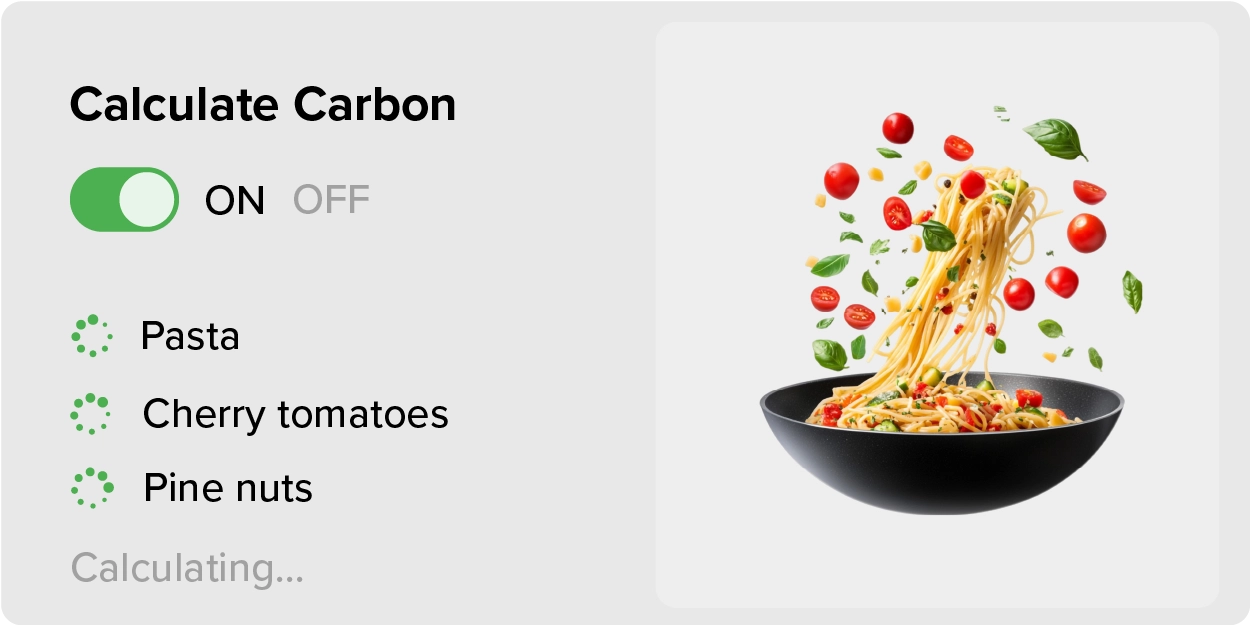
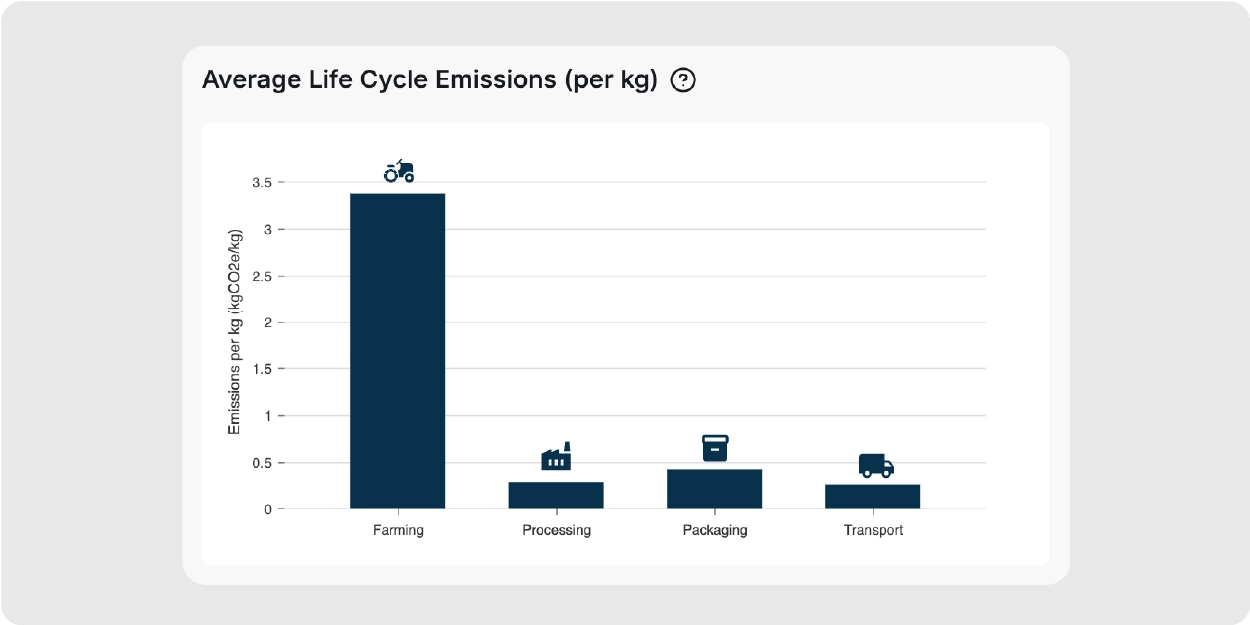
Test lower-impact ingredient swaps and see the results instantly. Kafoodle highlights carbon-intensive components, helping chefs design more sustainable dishes without sacrificing flavour, creativity, or cost control. Every adjustment updates in real time, empowering continuous improvement.
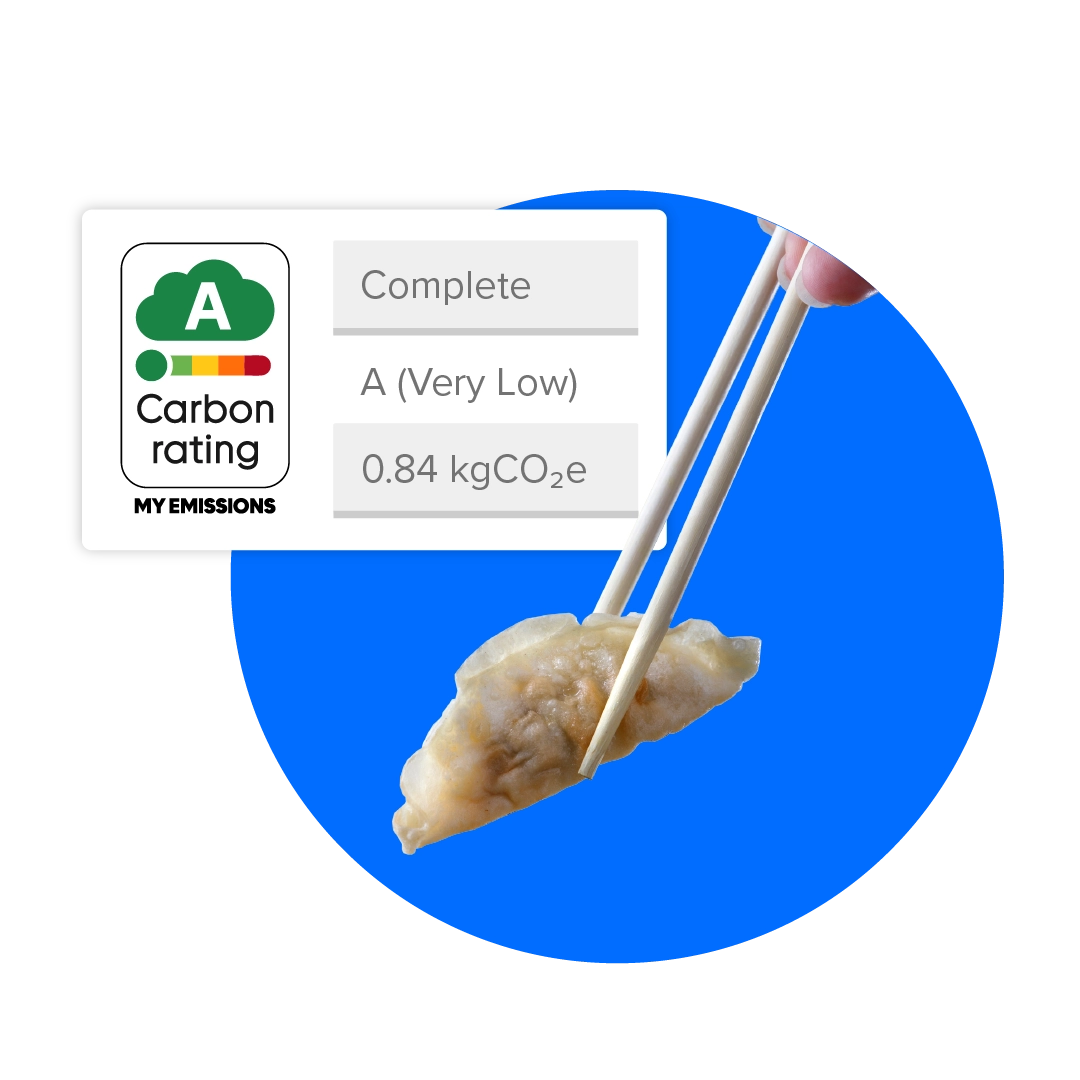
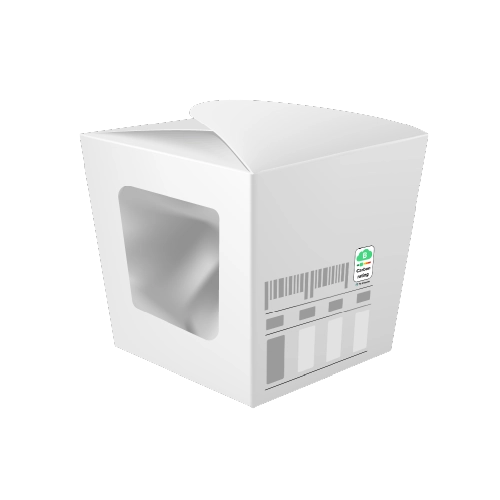
With one click, add A–E carbon ratings to food labels, printed menus, digital displays, and datasheets. Carbon information updates automatically across all channels, making sustainability easy to communicate and ensuring customers have the clarity they expect when choosing meals.
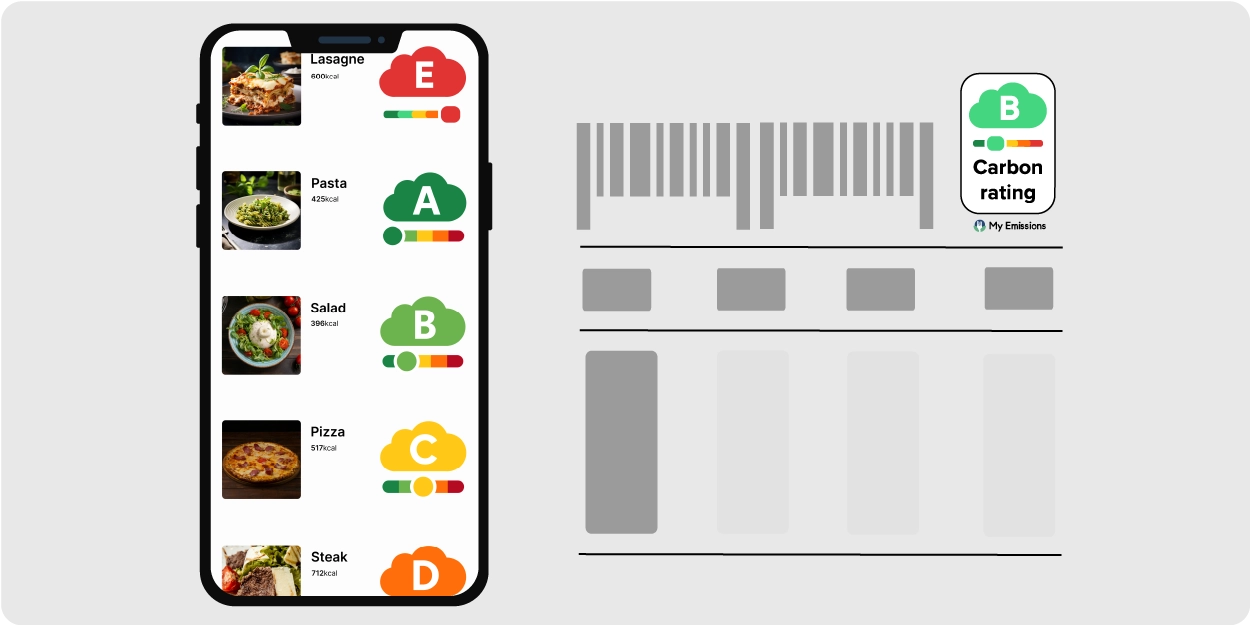
Show customers the difference their choices make. Kafoodle makes it simple to turn sustainability data into a clear, credible story that builds trust, meets expectations, and inspires action.




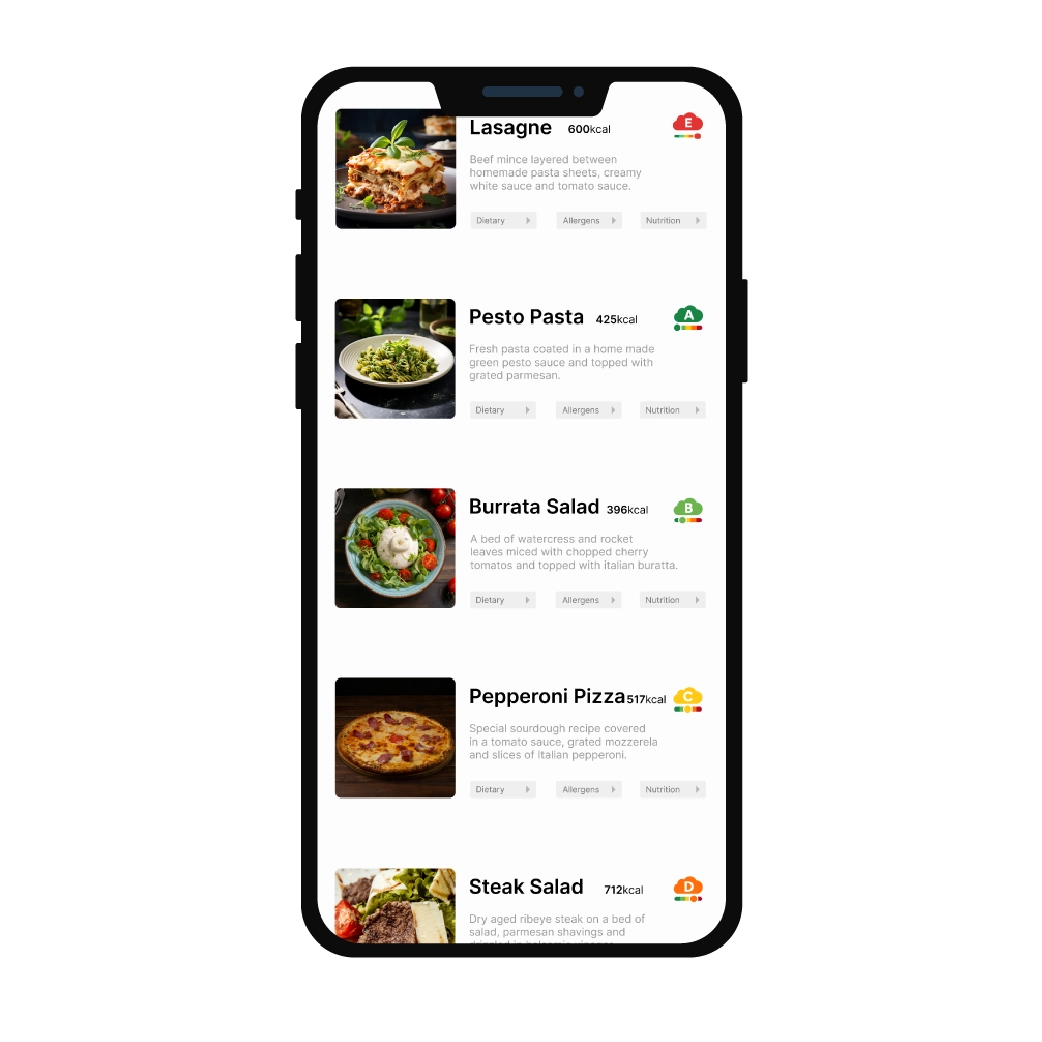





The food industry is responsible for more than 25% of all global greenhouse gas emissions. The My Emissions rating system has made it as easy as possible for food companies and consumers to understand the environmental impact of food. Easily track and reduce the carbon emissions of your recipes by storing all your data in a visualised dashboard.
Pinpoint your most carbon-intensive recipes, enabling strategic ingredient substitutions and crafting more sustainable, eco-friendly menus.

Monitor evolving carbon footprints, consistently set reduction targets, and continuously enhance your operational sustainability strategies.
Showcase transparent carbon data, inspiring customers and stakeholders with your organisation’s commitment to sustainable progress.
Easily track and reduce the carbon emissions of your recipes by storing all your data in a visualised dashboard.
Understand your carbon emissions baseline, identify emission hotspots, set emissions reduction targets, track progress, and access clear data insights to inform sustainability marketing initiatives.


Carbon labelling is also known as carbon footprint labelling. It's when you add details to a product's label that displays its carbon footprint.Carbon labelling involves measuring the greenhouse gas emissions associated with a product’s life cycle. Then applying that measurement to the product’s packaging or label. The product life cycle includes the production, packaging and distribution. Carbon labelling encourages consumers to choose products with lower environmental impact.
Carbon labelling is also known as carbon footprint labelling. It's when you add details to a product's label that displays its carbon footprint.Carbon labelling involves measuring the greenhouse gas emissions associated with a product’s life cycle. Then applying that measurement to the product’s packaging or label. The product life cycle includes the production, packaging and distribution. Carbon labelling encourages consumers to choose products with lower environmental impact.
Built directly into the Kafoodle recipe database, users have to tick the ‘calculate carbon footprint’ options once creating a recipe to calculate the carbon score.
Users can view a recipe’s carbon rating from the recipe home screen or the Carbon Footprint Datasheet for a more detailed overview of an account’s recipe’s performance that can be exported and further analysed.

Quickly add a recipe’s carbon footprint score to food labels by selecting the option inside the label template builder or download the carbon rating label as a PNG file for external use, such as marketing activities.


.png)
Understand carbon labelling quickly with clear steps for measuring, displaying, and reducing recipe emissions.